


The Document Assembly Line, created by the Legal Innovation and Technology Lab (LIT Lab) at Suffolk University Law School, helps individuals build open-source access-to-justice tools and resources for court forms, online guided interviews, and e-filing. It provides affordable Docassemble hosting and e-filing tools for courts and legal aid organizations. The LIT Lab has also created free and open-source software for building and e-filing court forms, supported by an active community of courts, legal aid organizations, and volunteers such as:
In May 2025, an eviction sealing law went into effect in Massachusetts. Suffolk LIT Clinic students, in collaboration with the Massachusetts Trial Court, built an online guided interview tool. The tool makes it easy to complete a petition to seal an eviction and e-file it with the court. During the first week, more than 300 people completed the petition using the new guided interview. Learn more: https://suffolklitlab.org/eviction-sealing-tool-launched-with-massachusetts-trial-court/
“A well-designed form allows people to express themselves in a way the court can understand.”
—David Colarusso, Suffolk LIT Lab Co-Director
February 1, 2023
DV AWARE stands for Domestic Violence Analysis, Warning, Action, Recovery, and Engagement. Perpetrators of domestic violence can threaten the safety and well-being not only of their intimate partners and children, but also courts and communities. Beginning with a grant from SJI in 2021, the DV AWARE Project sought to support juvenile and family court systems …
January 1, 2023
On March 30, 2020, the Boards of Directors of the Conference of Chief Justices and Conference of State Court Administrators took action to establish National Judicial Task Force to Examine State Courts Response to Mental Illness to assist state courts in their efforts to more effectively respond to the needs of court-involved individuals with serious mental illness. …
December 1, 2022
During the pandemic, the Puerto Rico Office of Courts Administration (OCA) created an email account through which self-represented litigants (SRLs) seeking an emergency restraining order, a temporary detention or an involuntary admission order related to the Mental Health Code could file their petition to the Municipal Court. SRLs could download, complete, and submit the applicable …
November 1, 2022
In January 2022, the National Association of Counties, Rulo Strategies, and Praxis Consulting launched a new initiative to support justice-oriented strategic planning co-led by judges and elected county leaders. This timely project leveraged the renewed interest many courts have, coming out of the pandemic, in partnering with local stakeholders to expand the resources available to …
October 1, 2022
In 2020, the Kentucky Administrative Office of the Courts (AOC) received a SJI grant to assess the court’s access to and use of mental health and substance use recovery services within the community. Funding allowed the Crime and Justice Institute (CJI) to conduct an assessment of strengths, opportunities and challenges that judges, court personnel and …
September 1, 2022
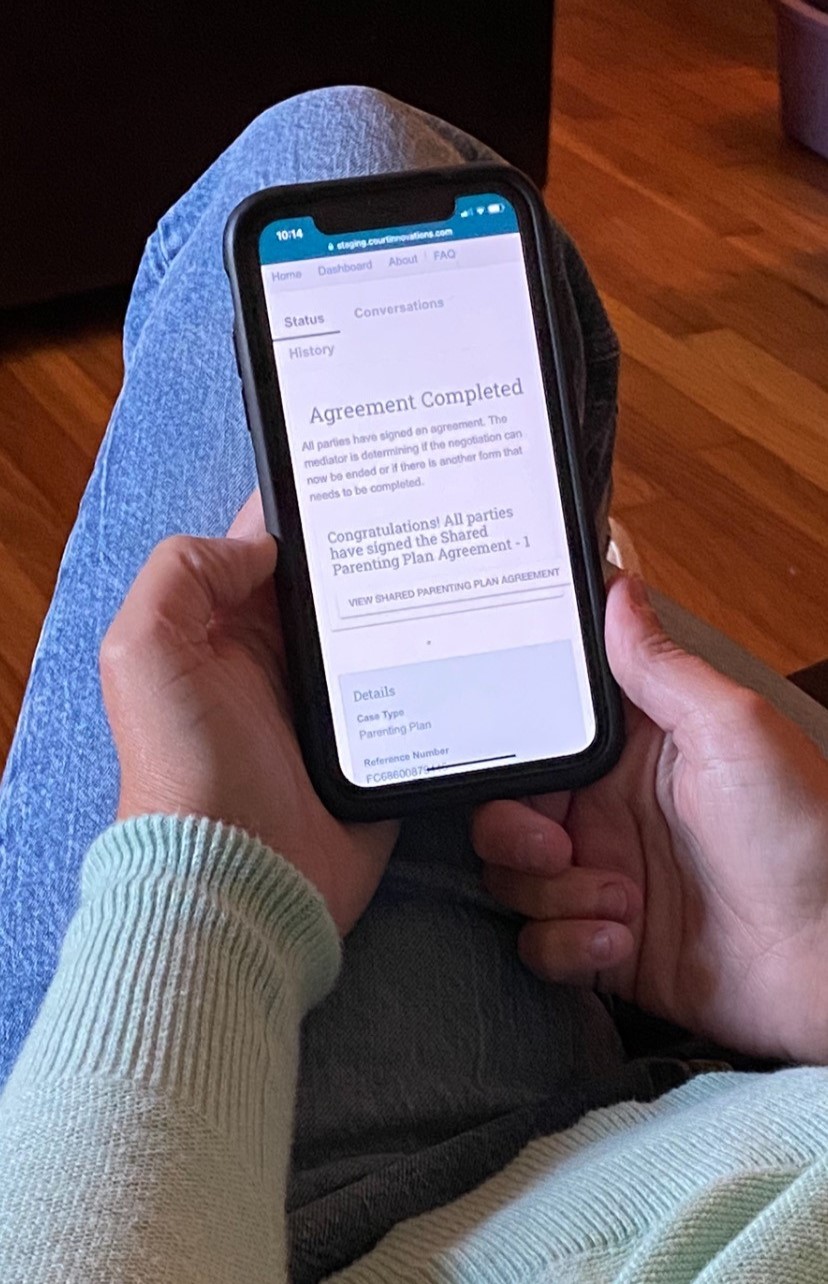
The emergence of COVID-19 has had widespread effects throughout the court system and quarantine orders slowed operations. The Supreme Court of Ohio anticipated an influx of evictions and foreclosure filings in Ohio’s trial courts, as well as a backlog of civil cases. Chief Justice Maureen O’Connor directed the Office of Court Services to convene stakeholders …