Many self-represented litigants are relying on AI tools, often general-purpose chatbots. Courts and legal aid organizations face critical questions about whether and how to help self-represented litigants use AI tools in ways that are constructive.
Join the TRI/NCSC AI Policy Consortium for Law & Courts as it brings together leaders from state courts, legal services, and access to justice initiatives to explore this challenge.
Whether you’re a legal professional, community advocate, or just curious about AI’s role in justice, this webinar is for you!
The Arizona Supreme Court implemented the Arizona Lawyer Apprentice Program (ALAP) on September 1, 2024, with generous grant support from the State Justice Institute, creating an alternative pathway to law licensure. ALAP is designed for candidates who narrowly miss Arizona’s Uniform Bar Exam (UBE) passing score of 270, recognizing that a single cut score does not perfectly measure attorney competence and future success. Rather than requiring these candidates to retake the UBE, ALAP allows those scoring between 260 and 269 to practice law under the supervision of an experienced Arizona attorney.
Participants must commit to two years of providing legal services in rural areas or with public law offices statewide and meet all other admission standards. Upon successful completion of the program, an ALAP licensee transitions to a regular license to practice law in Arizona. This innovative program reflects the Court’s commitment to expanding access to justice while offering aspiring attorneys a meaningful opportunity to demonstrate their competence.
After one year, ALAP has shown strong engagement with 70 applications received. For the July 2025 UBE, 16 of 44 eligible candidates (36%) have applied, while for the February 2025 UBE, 20 of 36 eligible candidates (56%) have applied. Earlier eligibility periods yielded 19 applications from July 2024 examinees (35%) and 7 applications from July 2023/February 2024 examinees (12%).
To date, 44 ALAP licenses have been issued, with 40 currently active. Three licensees subsequently achieved a UBE score of 270 or higher, and one license expired due to failure to secure qualifying employment. Seventeen ALAP applications remain active. For more information about ALAP you can visit the ALAP website ALAP – Arizona Lawyer Apprentice Program. For information on how to apply, see Arizona Attorney Admissions – Applications & Information.
The SJI Board met on December 15th, 2025, and awarded 18 new grant applications totaling $2.0 million for the 1st quarter of FY 2026.
The Board awarded six (6) Strategic Initiative Grants (SIG) to: National Center for State Courts (NCSC), in partnership with the Conference of Chief Justices (CCJ) and the Conference of State Court Administrators (COSCA for Phase I of a nationwide coordinated effort to develop modern expertise, tools, and updated best practices that can be adopted by all courts to improve the safety of court facilities and the public who use them; the National Council of Juvenile and Family Court Judges (NCJFCJ) to launch a training and technical assistance initiative on teen dating violence and domestic child sex trafficking as both independent and intersecting issues for courts and jurisdictions facing these issues; the NCSC for Phase II of the Artificial Intelligence (AI) Readiness Initiative which will assist state developing and implementing their own AI governance structure as described in the SJI-funded AI Readiness Guide, update and expand the Guide based on courts’ experiences, and host an AI Readiness Lab for up to 15 courts; the Justice Management Institute, working with Kalamuna, Inc., for Phase II of the Online and Case Resolution (OCR) initiative by engaging new pilot courts in developing policy and implementation plans for OCR for traffic and misdemeanor cases, writing the requirements for OCR expansion across Louisiana, and planning and designing the OCR open-source online repository with access to the software and derivative applications; the NCSC and its partners for Phase II of the State Courts Role in Effective Justice for Young People Initiative to continue responding to request for technical assistance and developing court-based solutions to common barriers in administering justice to those aged 18-24; and Policy Research Associates to update a national scan of non-lawyer, non-legal programs across the U.S., develop and validate performance metrics for evaluating these programs, and implementation support to jurisdictions interested in evaluating their programs.
Three (3) Project Grants to: the National Association for Court Management (NACM) to develop and deliver nationally significant education programs, related material, and curricula with a continued focus on SJI’s Priority Investment Areas and the NACM Core®; the Washington Administrative Office of the Courts, in partnership with the Washington District and Municipal Court Judges’ Association to launch the Jurist in Residence program to ensure that every newly appointed or elected judge in courts of limited jurisdiction receives the mentorship, tools, and leadership needed to transition successfully into their role; and Four Corners Group, Inc., in partnership with the Cobb County, Georgia, Juvenile Court to deploy an intensive, multi-tiered support system that engages youth while in custody and reintegrates them in the school system to promote behavioral change and academic progression.
Nine (9) Technical Assistance Grant applications were awarded to: the Supreme Court of New Mexico to examine the possible use of authorized justice practitioners across the state, especially rural areas; the Coconino County, California, Superior Court for a strategic planning project; American University to support the National Judicial Network on human trafficking and the state courts; Santa Cruz County, California, Superior Court for a strategic planning initiative, the Supreme Court of Nevada and the Nevada Department of Human Services/Division of Child and Family Services for a youth justice system review; the Oregon Judicial Department for a case management assessment in Deschutes County; the Supreme Court of Virginia for a civic literacy and e-learning project; and the Cleveland, Ohio, Municipal Court to implement a Continuity of Operations Plan.
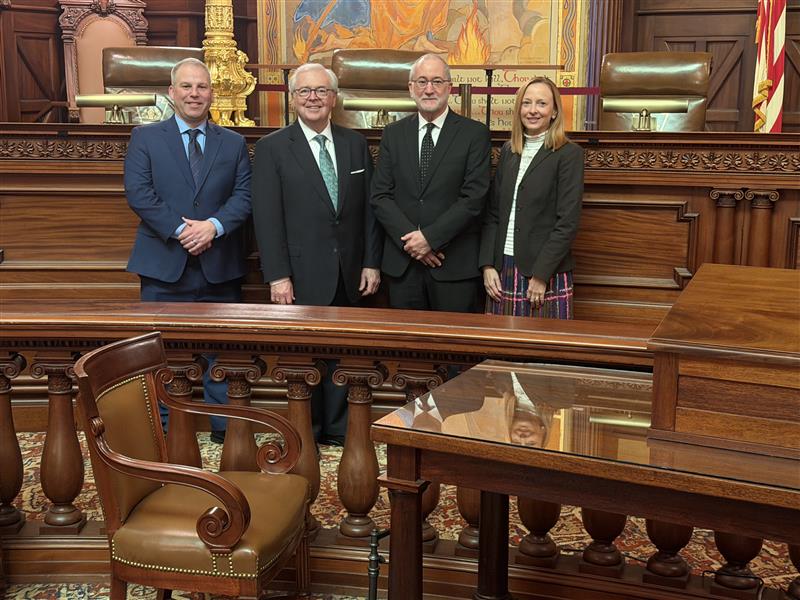
The FY 2026 1st Quarter SJI Board Meeting was held on Monday, December 15th, 2025, at the Pennsylvania Judicial Center in Harrisburg, PA. SJI Executive Director, Jonathan Mattiello, Senior Program Advisor, Michelle White, and members of the SJI Board were joined by Justice P. Kevin Brobson of the Pennsylvania Supreme Court, State Court Administrator, Andrea Tuominen, and staff of the Administrative Office of Pennsylvania Courts (AOPC).
SJI is honored to fund this initiative—driving forward solutions that make our courts clearer, easier to navigate, and more responsive to the people they serve. Through this initiative, IAALS aims to create a justice journey that is simpler, more supportive, and more responsive to the millions of people who navigate these cases each year. It will provide a clear, research-driven framework that will:
Map and streamline the full case pathway to eliminate unnecessary steps
Integrate legal help strategically—from lawyers to allied professionals to navigators
Develop user-centered technology that guides people through forms and required actions
Pilot redesigned models with courts and create a replicable national blueprint
“Justice should serve people, not confuse them,” said Chief Justice Wallace B. Jefferson (Ret.) of the Texas Supreme Court. “Uncomplicated Courts is about removing needless complexity so people can resolve their disputes and protect their rights even if they cannot find a lawyer.”
The National Council of Juvenile and Family Court Judges (NCJFCJ) is virtually holding an important training focused on the often-overlooked role of nonvisible disabilities in civil legal proceedings involving military-connected survivors. This session will explore how conditions such as PTS/D, Traumatic Brain Injury (TBI), Military Sexual Trauma (MST), and cognitive processing challenges can shape a survivor’s engagement with the civil legal system.
Participants will learn:
How nonvisible disabilities may affect a survivor’s presentation and perceived credibility
Ways these conditions influence participation in civil protection, custody, and guardianship proceedings
How to distinguish trauma-related responses from behaviors that may appear as disengagement or deception
How these dynamics uniquely emerge in child custody cases and emergency protective order hearings
This training is designed for judges, court personnel, legal professionals, and anyone working with military-connected survivors in civil matters.
Throughout the country, courts are grappling with unmet legal needs, complex and opaque processes, widening inequities, and declining public trust. The Blueprint makes a simple, urgent case: judicial leadership is indispensable to rebuilding confidence and modernizing court systems. It presents a practical roadmap—rooted in real courtroom experiences—for judges to lead change ethically, effectively, and sustainably.
“Innovation is not an optional add-on to judging. A judge’s ability to do justice is directly informed by the quality of our justice system. Judges must be active participants in the work to improve our justice system so that it can fulfill the promise of equal justice for all,” said IAALS CEO Brittany Kauffman. “This Blueprint translates aspiration into action and identifies the resources judges need, the obstacles they face, and the concrete steps that move courts from status quo to people-centered systems.”
Drawing from sessions, roundtables, and skill-building workshops, the Blueprint highlights:
Resources judges need to succeed: Engaged people and partners, reliable technology and data capacity, diverse funding, time, a culture of creativity and iteration, and robust wellness supports.
The role of judges in leading innovation: Why frontline insight and judicial authority are pivotal for systems-level change.
Competencies of innovative leadership: From strategic thinking and data use to coalition-building and judicial wellness.
Common barriers and how to overcome them: Resource constraints, status-quo bias, ethical misconceptions, siloing, and collaboration challenges—paired with strategies to build buy-in and momentum.
Actionable strategies for the bench: Normalize change, question assumptions, pilot and iterate, gather data, engage skeptics, simplify processes, communicate clearly, and just get started.
The National Center for State Courts (NCSC), with funding from the State Justice Institute (SJI), launched a national initiative to strengthen state courts readiness for cyberattacks and technical disruptions through Cybersecurity and Disaster Recovery Workshops. These regional sessions (first virtual and then in-person) bring together judges, administrators, IT leaders, and communications staff to enhance preparedness, recovery, and continuity capabilities.
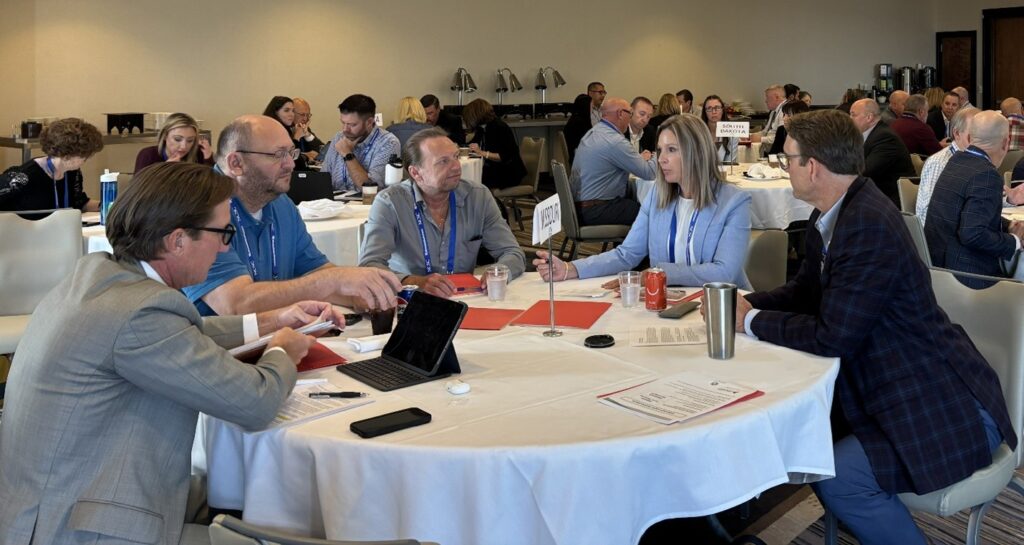
The first workshop was held in September 2024, and sessions have now been completed in four of five regions nationwide. The final workshop will take place in Rhode Island in April 2026. The most recent session, hosted in St. Louis, Missouri, included participation from Illinois, Iowa, Kansas, Michigan, Minnesota, Missouri, Nebraska, North Dakota, Ohio, South Dakota, and Wisconsin. Earlier workshops engaged participants from Alaska, Arizona, Guam, Hawaii, Idaho, New Mexico, Northern Mariana Islands, Nevada, Oregon, Utah, Washington, Wyoming, Delaware, the District of Columbia, Maryland, New Jersey, New York, Pennsylvania, West Virginia, Alabama, Arkansas, Florida, Puerto Rico, South Carolina, Virginia, and the U.S. Virgin Islands.
Each workshop follows a collaborative team-based approach, bringing together a judicial officer, IT leadership, court administrator, public information officer, emergency manager, and general counsel to collaborate through structured exercises that test and strengthen cybersecurity and disaster recovery plans. As part of each workshop, participants receive education and guidance, along with a court focused workbook and template designed to help courts create or refine incident response plans found here: The 2025 Cybersecurity and Disaster Recovery Workshop Workbook.
Pictured: Matt Brandes, Data Center & Enterprise Services Manager; Patrick Brooks, Director, Information Technology Services; Rick Morrisey, Deputy State Courts Administrator; Chief Justice W. Brent Powell, Chief Justice of the Supreme Court of Missouri; and Natalie Wilson, Information Security Manager; from the Missouri State Courts participate in a cybersecurity tabletop exercise.
“These workshops, and especially the tabletop exercises and workbook have set the standard for effective court focused cybersecurity education.”
– Shay Cleary, NCSC
“I thought the interaction between the NCSC, CIS, and State Court agencies was compelling and highly informative.”
-Participant from post event survey
This collaborative effort between NCSC, the Center for Internet Security (CIS), and the Chief Information Technology Officers Consortium (CITOC) is helping courts nationwide improve resilience and ensure continuity of essential justice services.
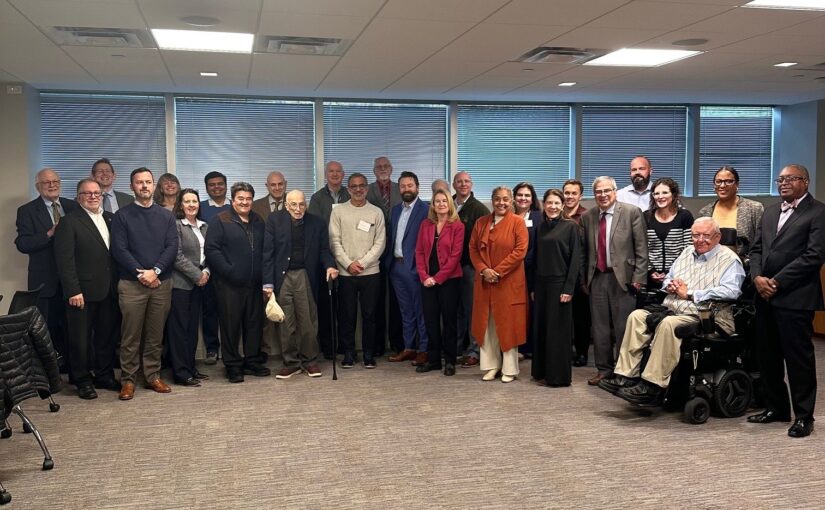
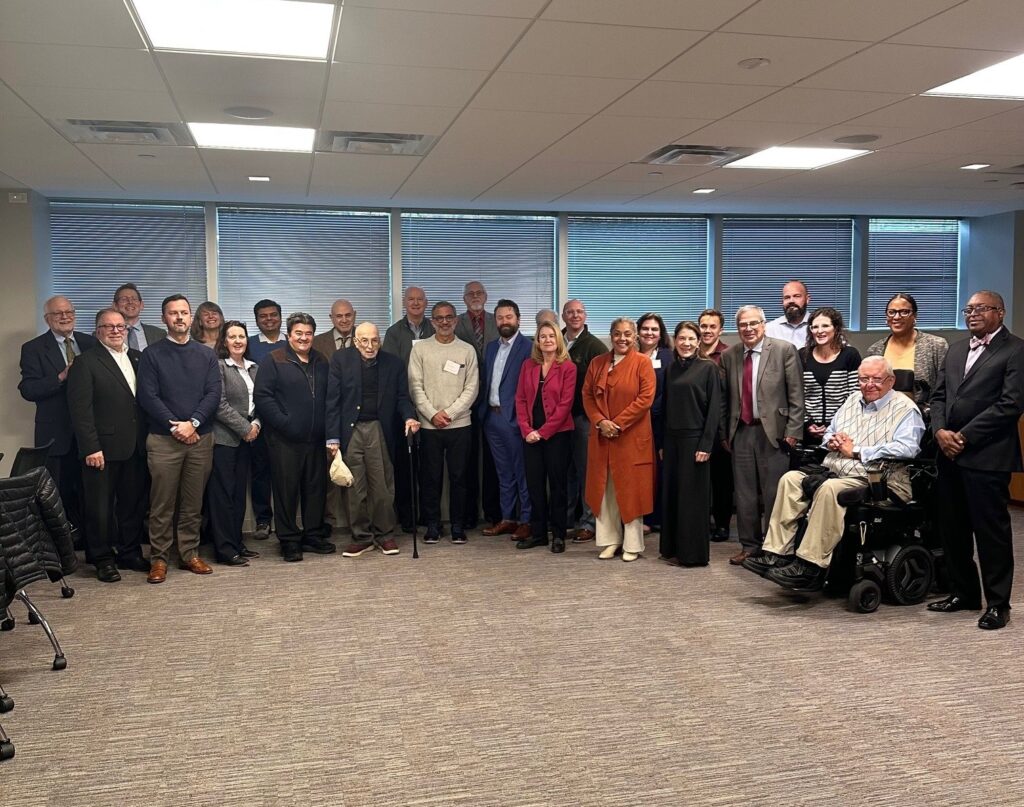
SJI is honored and proud to have the opportunity to host the Data Science & Artificial Intelligence (AI) Emerging Science & Technologies Conference, a court system strategic initiative held at the State Justice Institute Headquarters, put together by Michelle White and Lauren Curtis.
This inspiring conference, collaborated with The National Courts and Sciences Institute (NCSI), brought so many brilliant minds together, filled with collaboration, innovation and meaningful conversations. Fueled by knowledge. Driven by purpose.
The National Center for State Courts (NCSC) has just launched a new court planning framework, funded by the State Justice Institute, designed to strengthen court resilience and responsiveness by incorporating a rigorous focus on the future. Building on the Just Horizons work, the Future Ready Courts (FRC) framework helps courts anticipate and prepare for a wide range of potential scenarios, making it easier to adapt when change occurs.
“For many of us, thinking about the future is hard, especially with so many competing priorities right in front of us. It takes time and mental energy because we can’t just rely on what we already know,” said Pam Casey, NCSC vice president of research and design. “But thinking about the future can also be liberating, an opportunity to zoom out and see possibilities that are not evident when we are only focused on today. The FRC framework intentionally gives us space to think about and prepare for those possibilities.”
Future-focused framework
By integrating future-focused activities, the FRC framework helps courts think rigorously and systematically about the future, expanding our typical approach to strategic planning.
Strategic foresight, a critical pillar of the framework, helps courts identify drivers of change and envision alternative scenarios to see the bigger picture and help courts consider how core business functions and operations might change in both the near and distant future.
The FRC framework includes three interconnected components:
Strategic foresight: Envisioning alternative scenarios by identifying key drivers of change, emerging trends, and signals that influence the court’s future.
Strategic planning: Setting strategic priorities, goals, and objectives that align with the court’s mission, vision, and values.
Executing and adapting: Implementing plans, tracking results, and adapting strategic priorities to maintain resilience.

 When: January 21st, 2026, at 1:00PM EST.
 Sign up: https://zoom.us/webinar/register/WN_ZUPPIm9pQLiEo5aV-UR30w?#/registration