The SJI Board of Directors will be meeting on Monday, September 9, 2024, at 1:00 PM ET. The purpose of this meeting is to consider grant applications for the 4th quarter of FY 2024, and other business.
ADDRESS: District of Columbia Court of Appeals, 430 E Street, NW, Washington, D.C.
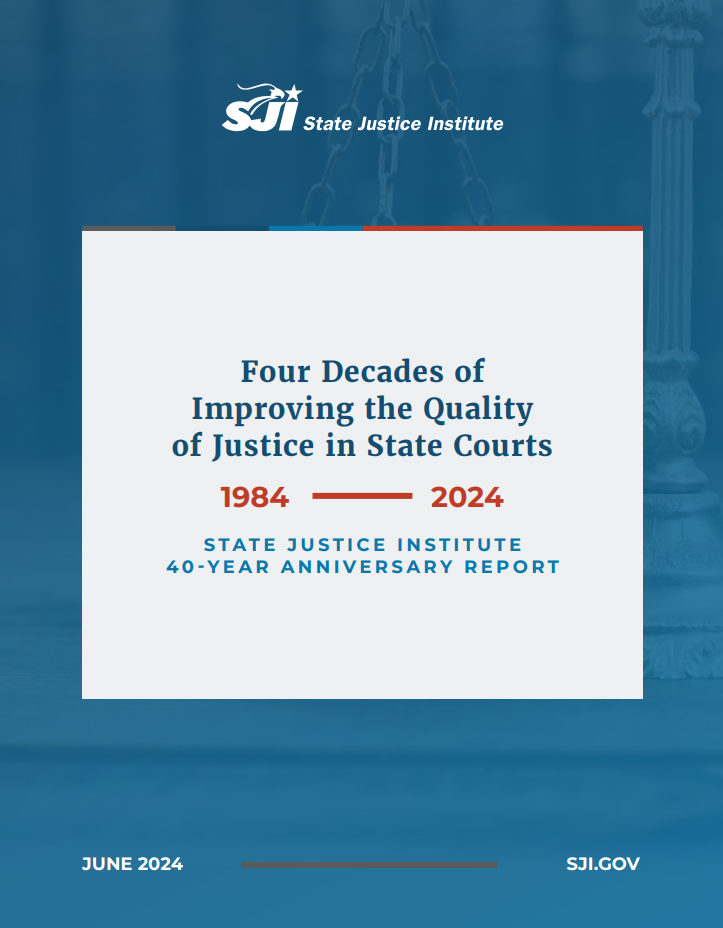
SJI and its Board of Directors are pleased to announce the release of a 40-year report that provides a retrospective overview of the important work that SJI has achieved over the past four decades, highlighting specific projects that have supported the greatest areas of need within the #statecourts.
Over the next decade, SJI will leverage funding whenever possible to help the state courts address the most critical issues. SJI will continue to focus on using its Priority Investment Areas to address court issues on a national level and maintain flexibility to adapt its grants to address emerging topics.
The Trauma-Informed Practice Strategy Lab (TIPS Lab) was born out of the need to address the trauma of people involved in criminal courts—an urgent need shown by statistics on the prevalence of violence and victimization in the United States. The Center for Justice Innovation is leading the development of the TIPS Lab, which includes a forthcoming blueprint for criminal court practitioners to recognize, address, and respond to trauma. The goal of the TIPS Lab is to bridge the gap between training and implementation of trauma-informed practices to support criminal court practitioners in non-specialty courts.
The TIPS Lab is documenting and supporting emerging and leading trauma-informed practices in criminal courts with special attention to the role court staff, administrators, and judicial officers play. The TIPS Lab launched in 2023 and has three distinct phases: Phase One of the project focused on conducting a national inventory of both the major challenges and opportunities that criminal courts face when implementing trauma-informed practices as well as an in-person symposium of though leaders in the field. Phase One culminated with the development of the publication Trauma-Informed Practices for Criminal Courts: Implementation Opportunities. Phase Two focused on the development of a forthcoming TIPS Lab Blueprint to provide courts detailed guidance on their implementation of trauma-informed practices. Phase Three will focus on the practical application of the TIPS Lab Blueprint through providing intensive technical assistance to a cohort of four to six diverse criminal court jurisdictions across the United States.
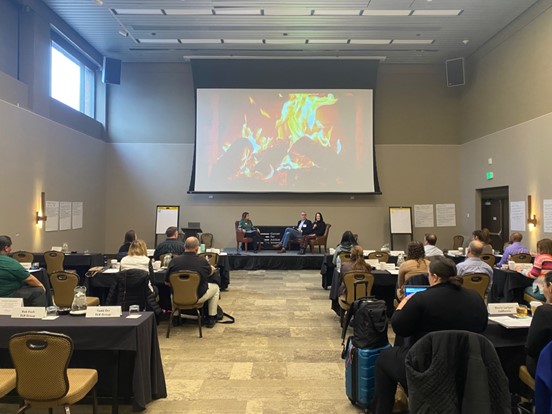
30 attendees convened in Denver, Colorado at the TIPS Lab Symposium held from November 2nd-3rd, 2023.
For more information, please contact Alejandra Garcia, Associate Director of Recovery and Reform, Center for Justice Innovation: garciaa@innovatingjustice.org.
Courts across the country are recognizing the potential of digital tools to bridge the gap for self-represented litigants navigating complex legal issues. These tools assist users in understanding the legal process and help them make informed decisions about their case.
These tools serve as virtual companions—offering step-by-step guidance and plain language explanations—for self-represented litigants in landlord-tenant and consumer debt cases, adding Philadelphia to the growing list of courts embracing innovative technology solutions to improve court services.
“The majority of our litigants are pro se,” said Judge Gregory Yorgey-Girdy, supervising judge of the Civil Division, Philadelphia Municipal Court. “This technology gives them the keys to unlock the doors of the legal process and allows easier access to the Philadelphia Municipal Court.”
Digital Assistants
Philadelphia’s new digital assistants guide court users through the landlord/tenant and consumer debt process. By answering questions about their situation, court users receive a customized “just-in-time” plan in a friendly, plain language document they can bring to court.
“There is no shortage of legal information online. Sometimes the challenge for users is managing it all and determining what to do next,” said NCSC Court Management Consultant Aubrie Souza. “Digital assistants enable individuals to focus on the next steps in their case rather than figuring out how to digest and piece together information found online.”
In 2011, Utah became the first state to embed the concept of proportionality into its rules governing discovery in civil cases. Utah Rule 26 created three tiers based on the amount-in-controversy at stake with tight deadlines and significant restrictions on the scope of allowable discovery for cases valued less than $50,000 (Tier 1), slightly longer deadlines and expanded discovery permitted for cases valued between $50,000 and $300,000 (Tier 2), and more traditional deadlines and scope of discovery for cases valued more than $300,000 (Tier 3). The result was more effective judicial case management, leading to fewer discovery disputes in tort and non-debt collection contract cases and significantly faster case resolution time. Utah’s experience with civil justice reforms became a cornerstone for the CCJ Civil Justice Improvements Committee recommendations concerning triage and case management.
Although COVID-19 disrupted civil justice reform efforts, court leadership in many states expressed confidence that the CJI recommendations, especially triage and judicial enforcement of case scheduling orders and deadlines, were the key to addressing civil case backlogs. With grant funding from the State Justice Institute, the National Center for State Courts (NCSC) returned to Utah to examine the longer-term impact of Utah’s civil discovery reforms. Using data on civil cases filed from 2013 through 2019, focus groups with Utah district court judges and civil practitioners, and surveys of attorneys in civil cases, the 10-Year Retrospective on Utah Civil Discovery Reforms focuses on the sustainability of Utah’s reforms over time as well as practitioner perceptions of civil legal practice.
NCSC continues data analysis, especially to account for shifts in caseload composition and discovery assignments, such as a decreased proportion of debt collection cases and increased Tier 3 cases driven by both increased tort cases and an increased tendency to assign tort cases to Tier 3. Although discovery disputes have continued to decrease over the past 10 years, the Utah district courts have not sustained the faster disposition times that were achieved in the first two years following implementation of the rules. Tier 1 and Tier 3 cases are still resolving faster than before the new discovery rules were enacted, but Tier 2 cases now resolve slower than in 2011. Compared to the period immediately after the discovery rules went into effect, Certificates of Trial Readiness (COR) were less likely to be filed in a timely manner, and more cases were disposed six months or more after the COR due date. In survey responses, attorneys noted inconsistent judicial case management practices, including enforcement of discovery deadlines and restrictions, which may explain some of the loss of progress on case resolution time. Of particular interest, attorney survey responses showed strong appetite for more consistent judicial enforcement with more than half expressing a preference for strict enforcement of the discovery rules. NCSC expects to complete data analysis and release its final report with recommendations in September 2024.
Youth across the country are facing unprecedented challenges, from community violence to mental health issues to school absences. These new resources from the CSG Justice Center provide state leaders, policymakers, and youth justice professionals with critical data and evidence-based solutions to address the growing challenges faced by youth and the systems designed to support them:
Navigating Concerns on Youth Crime, Violence, and Justice: What Does the Data Say? Details the most recent national data trends on youth mental health, arrests, violence, court cases, incarceration, and disparities along with key implications and recommendations for needed policy, practice, and funding improvements. These resources provide state leaders, policymakers, and youth justice and service professionals with critical data and evidence-based solutions to address the growing challenges faced by youth and the systems designed to support them. Also, save your spot for the accompanying webinar. Register here: https://csg-org.zoom.us/webinar/register/WN_AyhQKk3oR7quTEIDuNQHWg#/registration
Support or Court: How States Respond to Youth Who Commit Noncriminal Offenses and Children Who Break the Law. Many states are experiencing severe service and staffing shortages and youth are often pushed into the juvenile justice system, not because they are a public safety risk, but to receive needed services. This report focuses on youth who commit status offenses and children who break the law (minimum age of juvenile court jurisdiction), shares findings from a 50-state scan, and provides key takeaways and a call to action for more effective, systemic, community-based responses.
From First Offense to Future Arrests: The Impact of Probation on Youth. This study by The Pew Charitable Trusts, based on data provided by the Texas Juvenile Justice Department and analyzed by researchers at the CSG Justice Center and Pew, shows that diverting youth from probation could improve juvenile justice system efficiency and public safety outcomes.
This exclusive training program is hosted and presented by the National Council of Juvenile and Family Court Judges (NCJFCJ) and the National Association of Women Judges (NAWJ). This four-hour in-person training offers a unique opportunity for judicial officers and key team members to increase knowledge and promising practices using three stages to organize courts’ preparation for and response to dangerous incidents.
This training opportunity is a product of the NCJFCJ’s DV AWARE Project (Domestic Violence Analysis, Warning, Action, Recovery, and Engagement), funded by the State Justice Institute. DV AWARE is an interactive training program meticulously designed for judges, recognizing their crucial roles and their increased vulnerability to violence. For more information on DV AWARE, please click here: https://www.ncjfcj.org/dv-aware/
On June 18th, 2024, President Biden nominated LaKresha Moultrie to the SJI Board of Directors. Ms. Moultrie has led a career dedicated to service in the Delaware community. She currently serves as Vice President of Legal Affairs, General Counsel, and Chief Enterprise Risk Officer at Delaware State University, one of America’s leading Historically Black Colleges and Universities (HBCUs). In this role, she provides legal counsel to the University and its Board of Trustees. She also uses her legal expertise to assess critical issues facing the institution. Recently, she helped guide the University through the acquisition of Wesley College, which gained the University the distinction as the first HBCU to ever acquire a college or university.
Prior to joining Delaware State University, Ms. Moultrie led a successful career at the Delaware Department of Justice where she began as an entry-level prosecutor and progressed to Chief Deputy Attorney General, second-in-command of the office. Her career at the Department included trial and appellate work in all the State courts. She received her law degree from Delaware Law School of Widener University and her undergraduate degree, magna cum laude, from Pace University. Moultrie’s professional accomplishments and charitable activities were acknowledged when she was recognized by The Delaware Business Times as part of the Class of 2015 “40 Under 40” and one of the “40 Most Empowering Women in Business” in 2021.
Funded by the State Justice Institute, the National Center for State Courts, in partnership with Rulo Strategies LLC, launched the Rural Justice Collaborative (RJC) to showcase the strengths of rural communities and highlight the cross-sector collaboration that is a hallmark of rural justice systems. These strengths include strong professional networks, deep ties to the communities they serve, resiliency, and ingenuity. The Rural Justice Collaborative is guided by an advisory council of rural practitioners representing the judiciary, public safety, behavioral health, public health, child welfare, victim services and other stakeholder-focused justice systems. The advisory council guides the initiative and has focused initial efforts on advancing innovation, promoting collaboration, and raising awareness of rural justice system needs.
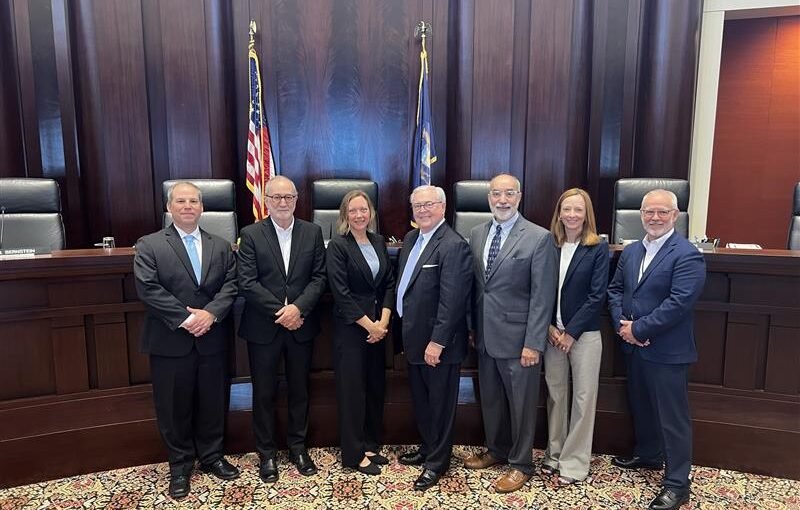
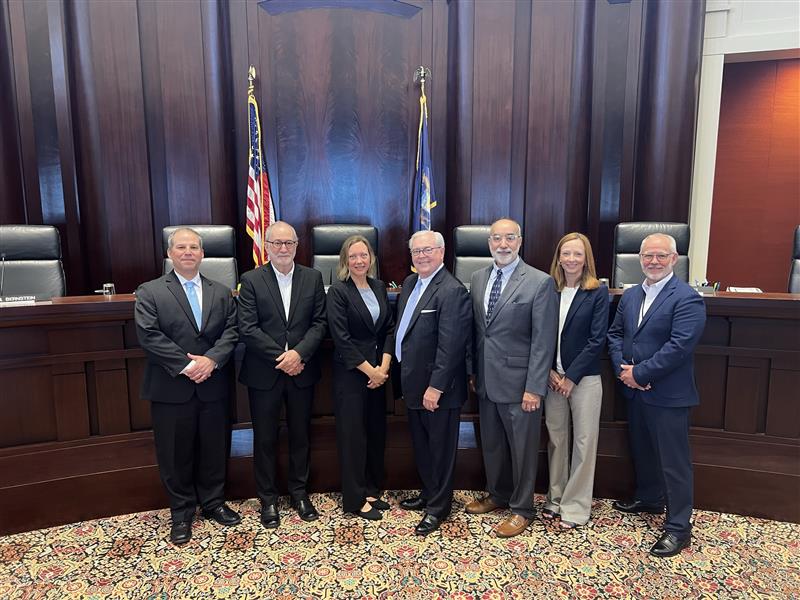
The FY 2024 3rd Quarter State Justice Institute SJI Board Meeting was held on June 3rd, 2024, at the Michigan Supreme Court in Lansing, Michigan. Members of the SJI Board, Executive Director, Jonathan Mattiello, and Senior Program Advisor, Michelle White, were joined by Chief Justice Elizabeth Clement and State Court Administrator, Tom Boyd, of the Michigan Supreme Court.
SJI received 14 grant applications requesting a total of $2,169,020 for the 3rd quarter of FY 2024.
The Board awarded three (3) Strategic Initiatives Grant to: 1) LaGratta Consulting for the Fairness Challenge Pilot Project, which will employ emerging innovations in diverse pilot courts to improve and measure procedural fairness; 2) the Council of State Governments Justice Center and the National Council of Juvenile and Family Court Judges to formalize and sustain a national juvenile justice training and resource center; and 3) the Meadows Mental Health Policy Institute, in partnership with the Center for Justice Innovation to develop a Blueprint for Adjudication for use by judicial officers and adjacent system actors before, and during, initial hearings to help facilitate access to mental health treatment and decrease the amount of time people with mental illness spend in jail.
Six (6) Technical Assistance Grant applications were awarded: 1) the Supreme Court of Nevada to develop an online guardianship portal that will enable online submission of guardianship filings and identify potential issues with guardianships; 2) the Alaska Court System for a caseflow management workshop; 3) the Nebraska Administrative Office of the Court and Probation for a self-help center pilot project in Douglas County, Nebraska; 4) the National Association of Presiding Judges and Court Executive Officers for educational programming; 5) the Unified Judicial System of South Dakota for a strategic planning project; and 6) the Kansas Supreme Court for court clerk organizational assessments in three (3) counties.
Three (3) Curriculum Adaptation and Training Grants were awarded: 1) the Council of Chief Judges of the State Courts of Appeal for educational programming during the 2024 annual meeting; 2) the National Judicial College (NJC) for podcasts on judicial independence and the rule of law; 3) and the NJC for training for judges on restorative justice practices.
The next deadline for grant applications is August 1, 2024.